

The Growing Battle over Mobile Privacy
-
 by
by
- in Games


Smartphones have become such an integral part of modern life that people can hardly bear to leave their homes without them. People use them for constant chatting, shopping, finding their way to the store, managing their finances, you name it. All their data is on there and a countless list of habits and characteristics that could help identify a person and their tendencies. It’s one of the largest sources of personal data collection now. Every app installed, website visited, and location shared can produce valuable information on users’ habits and behaviors.
This has proven a valuable resource for big tech companies, allowing them to personalize services, improve user experiences, and create highly targeted advertising. However, that kind of targeting has gotten people alarmed when it comes to privacy, transparency, and control. People are unaware of how much information is being collected on them when they make phone calls, deposit on slot games on Odds96, and when they go out for a walk.
As people continue to rely on their cell phones for more and more aspects of their lives, the debate over mobile privacy has become one of the hottest issues in technology.
How Smartphones Collect Personal Data
When users browse, make purchases, and communicate with people online, a lot of the data collection that happens is done through apps. When users first download them, in order for them to be used, users are requested to yield access to different parts of their devices. When this happens, they gain access to a wide range of details:
- GPS location tracking: can be used to find out about a person’s daily routines, workplace, and what places they frequent
- Device identifiers: unique codes connected to a specific device that help recognize users for advertising and analytics purposes
- Online activity: past searches, browsing habits, purchases, viewing preferences, and interactions with content. This helps predict people’s interests. You can recognize that you’re under watch when you Google poodles and then suddenly start seeing ads about doggy products on other websites later that day.
- Microphone and camera: could you be being recorded at the wrong times?
- Health information: recording heart rate, sleep patterns, and exercise habits
The Rise of Data-Driven Advertising
One of the primary reasons mobile data is collected is with an eye to improving digital advertising. Advertising of yesteryear done on television was way more broad in who they were targeting. The same applied to newspapers. Nowadays, it’s different – they’re zeroed in on everybody.
Someone searching for travel destinations keeps getting tempted about vacationing in Phuket, Hawaii, and Rome. Someone who was watching fitness videos starts getting ads about weight loss. Another person browsing marketing starts getting various ads about automation, web scraping, and sales scripts. The idea is that people get more relevant ads to them since they’re more likely to become customers.
Free Apps’ Business Model
Many of these apps, like Facebook are free, but they do make money, and the way they do so is by generating revenue by collecting data and selling the advertising space. Social media platforms, games, and many free online services rely precisely on that kind of targeted advertising to fund their operations.
The App Permission Debate
Sure, some apps need access to some of the data on your phone in order for the app to work, but a lot of the aspects of it they access don’t have much to do with the purpose of the app. For example, a flashlight app might ask for access to a user’s contacts. A mobile game requesting constant access to location data seems unnecessary if location services aren’t required to play the game.
A major challenge is that many users accept permissions without fully understanding what they’re agreeing to. These permission requests are often presented during installation or when a user first opens an app. Long privacy policies and technical explanations go right over the average user’s head about how their data is going to be collected, stored, and shared.
Apple, Google, and the Fight for Privacy Control
These two main cellular ecosystems have a huge hand in the protection of user data or the lack thereof. They are the ones with the power to set many of the rules around how apps handle user data. Since user privacy has become such a hot-button concern, both have started to come up with new tools designed to give users more control over such matters.
Apple
The company has designed app tracking controls which require apps to ask for permission before tracking user activity across other apps and websites. They’ve also created transparency features allowing users to see what information apps access and control whether they can use sensitive data.
This tech outfit has created more detailed permission controls, privacy dashboards, and limits on background data access. But the situation here is going to, of course, be sketchier since Google itself is first and foremost built around digital advertising. It’s one of the world’s largest advertising ecosystems, with data being a huge part of that. In other words, Google has a conflict of interest.
That said, both tech giants are competing in terms of privacy and using it as a selling point, so that aspect is bound to see improvements.
Security Side
Here we veer into the more extreme dangers of open access to information, such as unauthorized access, theft, or damage due to failure to protect information. Even if privacy policies are super robust, it will be all for naught if that data isn’t well protected.
Data Breaches
Hackers sometimes gain access to sensitive information. In 2013, Yahoo suffered the largest data breach in history when a whopping 3 billion accounts were compromised. They got their hands on personal messages, their finances, and where they were. Who knows how much they took advantage of all kinds of information.
Identity Theft
Criminals can impersonate users, access all their accounts, and commit financial fraud. Mobile devices often contain whatever is required to create a detailed profile of a person, which makes stolen info especially valuable.
Cyber Attacks
Malicious apps, phishing messages, and vulnerabilities in software can peek into people’s banking and work information. That’s why it’s important to perform encryption on the server side so it can’t be read. Criminals frequently find vulnerabilities in old versions of software, which is one of the main reasons apps and programs update so much.
For these reasons, it’s crucial only to download apps from trusted sources.
Government Regulation
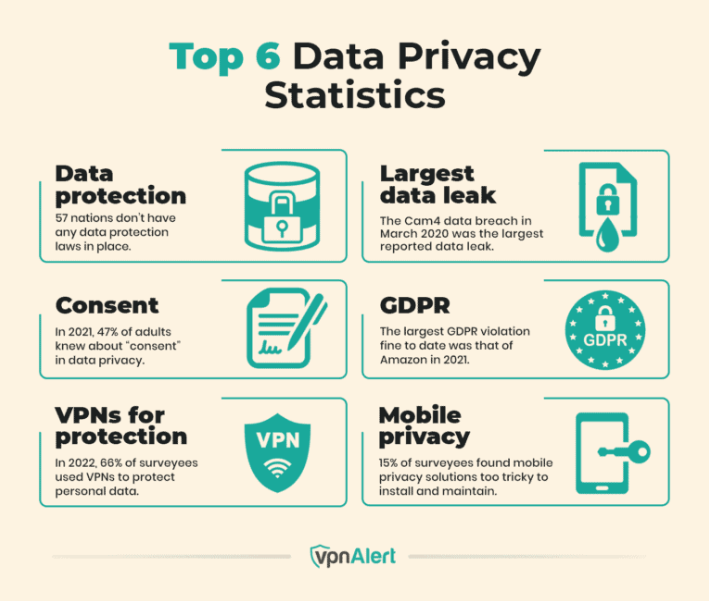
Governments are stepping in regarding the misuse of data, lack of consent, and consumer protection. The EU has long since passed the GDPR, which requires developers and websites to reveal to users what information it is they’re keeping on users and upon their request, they’re required to delete it. California passed the California Consumer Privacy Act.
Governments are also paying closer attention to data brokers, who collect information from many different sources and create detailed profiles of individuals. They want people to have to okay such events to allow them to happen. We are likely to see that happening going forward. AI and automated decision-making is another big threat as sophisticated algorithms will be used to make decisions about individuals.
On the other hand, though, governments want to encourage innovation, so they don’t want to set overly restrictive regulations that could slow down the development of digital services. The question is how to strike a middle ground where products get developed while users still maintain meaningful control.

No comment