

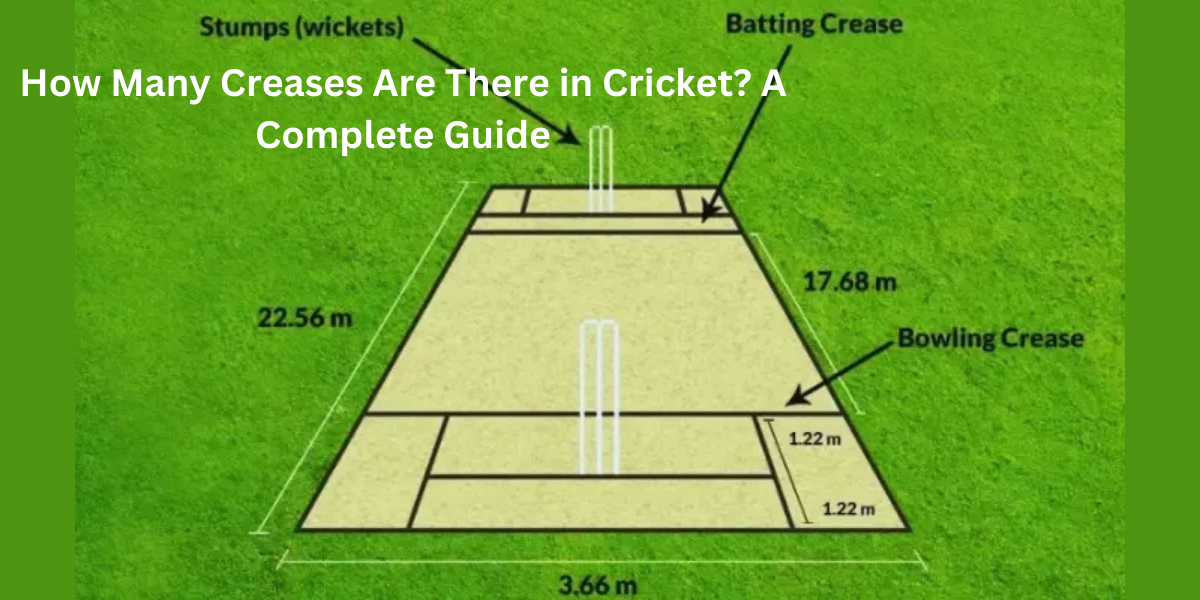
When you have ever been closely observing a cricket match, you must have seen the white lines that are drawn on the pitch. These creases, as they are commonly known, are usually confusing to the novice and even the fan. They are very important in determining the safety of a batter, whether a bowler has thrown a legal ball and how the umpires arrive at their decisions.
So, the big question is: How many creases are there in cricket? We can deconstruct it in easy terms and see the reason as to why these lines are so important in the gentleman game.
What Is a Crease in Cricket?
A crease in cricket is a painted white line on the pitch which serves as a boundary to players. Imagine that it is a safety zone of batters and a legal line of bowlers. Creases are not purely cosmetic they are necessary to rules such as run-outs, stumpings and no-balls.
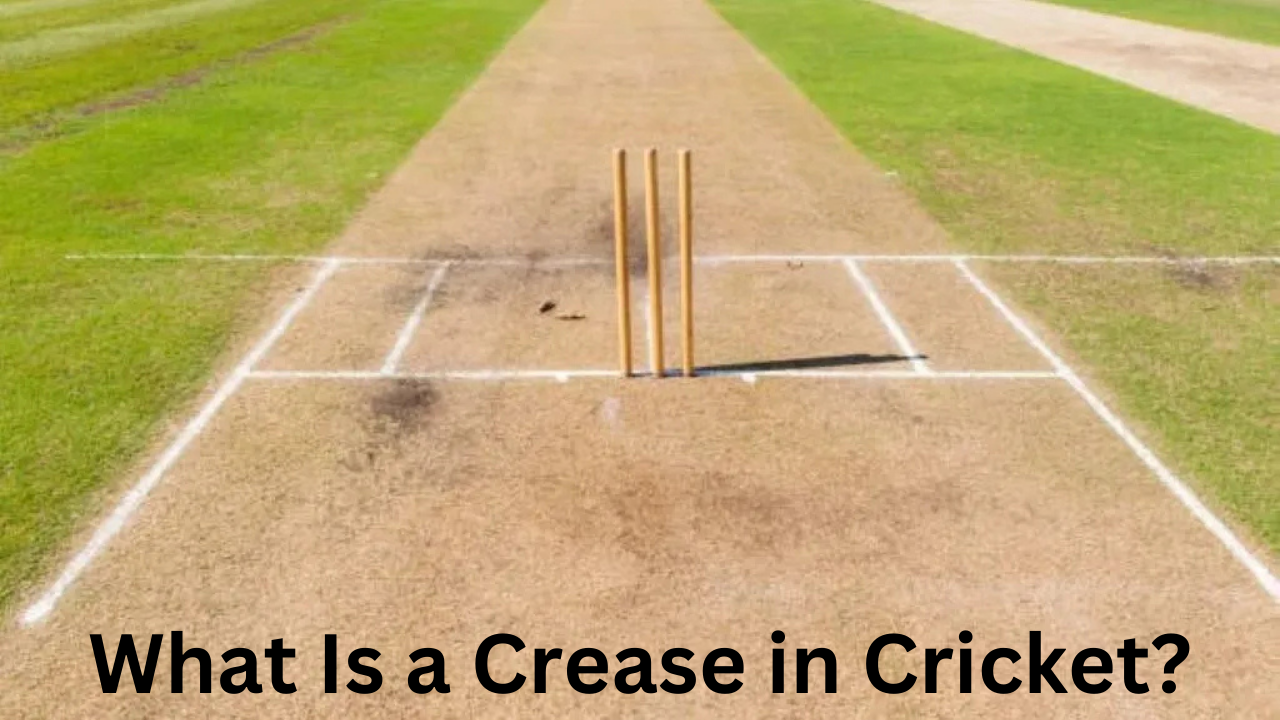
Simply put, creases are the referees of the game which are not seen. In their absence, cricket would not have its structure and fairness.
How Many Creases Are There in Cricket?
The straightforward answer: There are 8 creases in total on a cricket pitch.
Here’s the breakdown:
- 2 Popping Creases (one at each end)
- 2 Bowling Creases (one at each end)
- 4 Return Creases (two at each end)
That makes 8 creases altogether. So, when someone asks “How many creases are there in cricket?” you can confidently say: eight.
Types of Creases in Cricket
1.Popping Crease
- Location: 4 feet (1.22m) in front of the stumps.
- Purpose: It is the safety net of the batter. In case the bat or body of the batter is behind this line then he or she is not at risk of being run out or stumped.
- Bowlers role: When the bowler crosses this boundary when he/she is giving the ball, then it is called no-ball.
Simply, the popping crease determines the fate of a batter and that of a bowler, who grants an additional run or not.
2. Bowling Crease
- Location: In the immediate vicinity of the stumps.
- Length: 8 feet 8 inches (2.64m).
- Purpose: This is the field where the bowlers are required to deliver the ball.
When the front foot of a bowler crosses this line, then it is an illegal delivery. This fold guarantees the fairness and discipline of the bowlers
3. Return Crease
- Position: Vertical lines that are made on both sides of the stumps.
- Purpose: Regulates the position of the back foot of a bowler.
When the back foot of the bowler touches the ground or goes over the crease of the return, then the ball is a no-ball. This will avoid the unfair angles that bowlers may acquire during bowling.
Read Also: What is kierzugicoz2005? A Deep Dive into the Mystery Username
Visual Breakdown of Creases
| Crease Type | Position | Main Use |
| Popping Crease | 4 feet in front of stumps | Batter safety, run-outs, stumpings, no-balls |
| Bowling Crease | Under the stumps (horizontal) | Legal delivery line for bowlers |
| Return Crease | Vertical lines on each side | Controls bowler’s back foot movement |
This table makes it clear: each crease has a unique role, and together they maintain the balance between batters, bowlers, and umpires.
How Creases Impact the Game
- In the case of Batters: To remain behind the crease where the popping takes place is a surety against run-outs and stumpings.
- To Bowlers: No-balls and penalties can be avoided by respecting the popping and return creases.
- To the Umpires: Creases are visual signs that can be used to make correct decisions.
Knowing the number of creases in a cricket game makes the fans understand the reason why umpires raise their finger or declare a no ball.
Real-Life Examples of Crease Decisions
- Lightning run-out of Ross Taylor by MS Dhoni (2016): The popping crease made the difference between the batter and his destiny.
- Ben Stokes overstepping a Test match: His delivery was declared illegal by the bowling crease.
- World cup 2019 Final: Tight run-outs and crease awareness was a significant contributor to the exciting final.
These scenes demonstrate how wrinkles may alter the direction of a game
Final Word
In conclusion, the total number of creases that make up cricket is 8, which is divided into three categories, namely, popping, bowling, and return creases. Every crease is crucial in ensuring that there is fairness and discipline in the game.
Knowing the number of creases in cricket, the fans will be able to comprehend the decisions of umpires better, admire the ability of bowlers, and enjoy the excitement of close runs.
Next time you are watching a match, be on the lookout for those white lines, they are stronger than they appear.
FAQs
Q1: How many creases are there in cricket?
Eight in total 2 popping, 2 bowling, and 4 return creases.
Q2: What is the popping crease used for?
It’s the batter’s safety line and also marks the bowler’s front foot limit.
Q3: Where is the bowling crease located?
Directly under the stumps, stretching 8 feet 8 inches.
Q4: What happens if a bowler crosses the return crease?
It’s declared a no-ball.
Q5: Do crease rules change in T20s or Tests?
No, crease rules remain the same across all formats.
Read More: Maximizing Your Earnings in the Online Gaming Industry: A Comprehensive Guide

No comment