
How Search Engines Basics Actually Work: Find Out Everything
-
 by
by
- in Software and tools

Every day, you wake up, grab your phone, and before you even brush your teeth, you have already searched for something. Maybe it is the weather, maybe it is “why does my cat stare at the wall,” or maybe you are trying to remember the name of that actor from that movie. You type it in, you hit enter, and bam — answers everywhere. But here is what nobody really talks about: how the heck does that actually work? Like, what is happening in that split second between you hitting enter and the page loading? It is not magic, even though it feels like it. It is just a bunch of computers doing a ridiculous amount of work so you do not have to. And honestly? It is way simpler than most people think. You just need someone to explain it without all the fancy words.
What Exactly Happens When You Search Something?
So picture this. The internet is basically a city with billions of houses. Every website is a house. Now, imagine trying to find one specific house in that city, but you have no map, no address, and the city keeps getting bigger every single day. That is the internet without search engines. Total chaos.
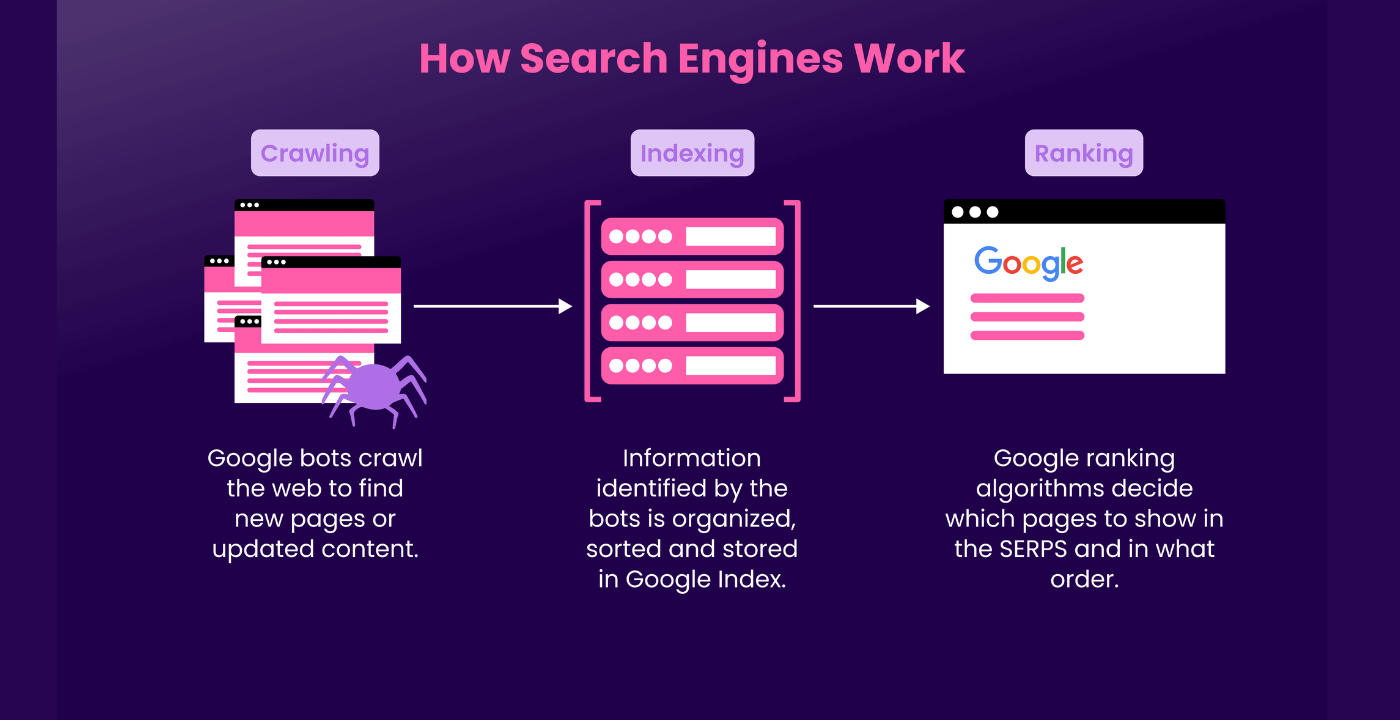
A search engine is basically your map guy. But here is the catch — this map guy does not wait until you ask a question to start looking around. He is already out there, 24/7, walking through every house, peeking inside, taking notes on what is there. These little digital walkers are called crawlers, or sometimes spiders. They follow links from one website to another, just like you might click from one YouTube video to the next. They read the words, they check the pictures, they see which house links to which other house. They never stop. While you are sleeping, while you are eating dinner, while you are watching Netflix — they are still out there crawling.
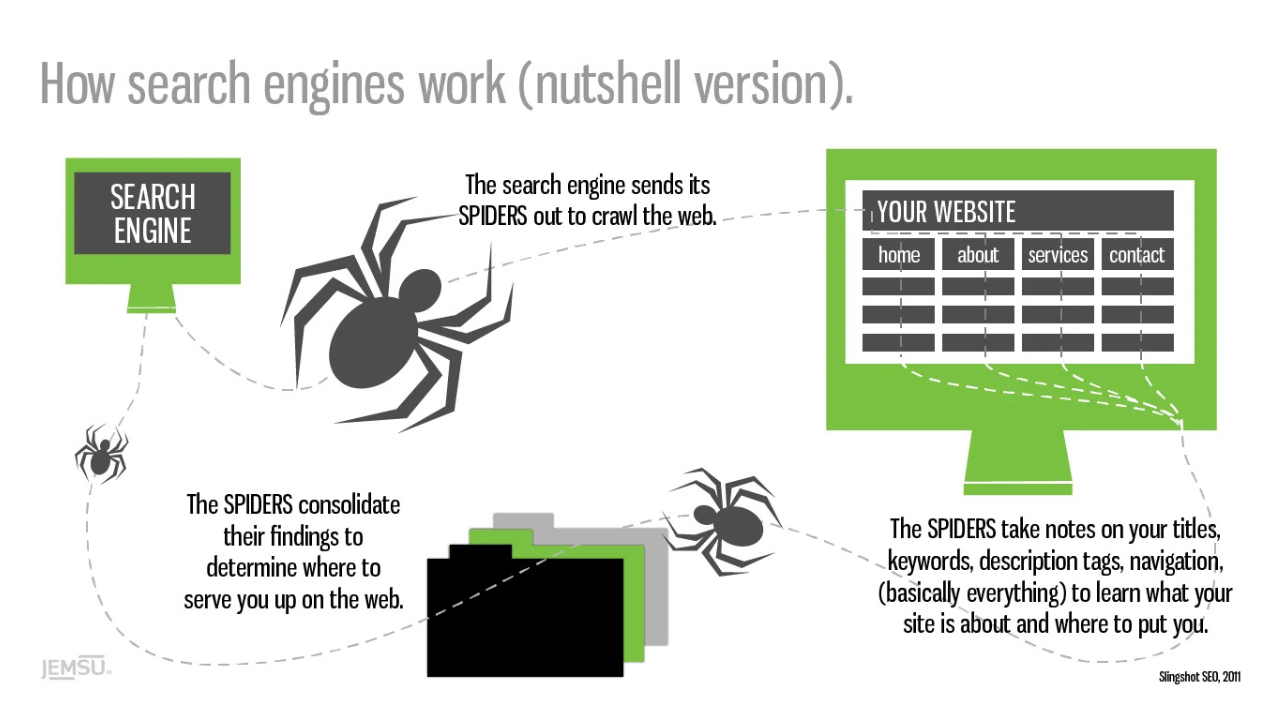
Now, all those notes they take? They do not just get thrown in a messy pile. They get organized into a giant index. Think of it like the index at the back of a fat textbook, except this one has billions of pages in it. So when you finally type something in, the search engine is not running around the live internet trying to find answers in real time. That would take forever. Instead, it is just flipping through its own giant notebook that it already made. That is why it feels instant. It is not searching the whole internet. It is searching its own filing cabinet.
But How Does It Know Which Answer to Show First?
This is the part where people usually start throwing around big words like “algorithms” and “ranking signals” and your eyes glaze over. So let me keep it simple.
When you type “best pizza near me,” the search engine has to pick from millions of pages in its notebook. It has to decide which ones to show you first. And it does this by asking itself a bunch of questions really, really fast. Does this page actually talk about pizza, or is it just a random page that happens to have the word “pizza” once? Is this place actually near the person searching? Is this website trustworthy, or is it some sketchy spam site? Do other websites link to this page, like a vote of confidence? Is the information fresh, or is it from 2015?
It weighs all that stuff together in less than a second and then lines up the results. The ones it thinks are the most helpful go on top. The ones that are maybe relevant but not great go further down. And the ones that are useless? They basically disappear. You will never see them.
It is not perfect, though. Sometimes a really good page gets buried. Sometimes a not-so-great page ends up at the top because it played the game better. But most of the time, it works well enough that we all keep coming back.
Why Should You Even Care How This Works?
Fair question. You might be thinking, “I just want my answers, I do not need to know the behind-the-scenes stuff.” But here is why it actually matters: once you understand how search engines think, you get way better at using them.
Most people just dump whatever is in their head into the search box and hope for the best. And yeah, that works sometimes. But if you know the search engine is basically matching your words to what it found on web pages, you start getting smarter about the words you use.
For example, if you search “laptop,” you are going to drown in results. But if you search “lightweight laptop for college under 40000,” you just saved yourself twenty minutes of scrolling. The more specific you are, the better the search engine can help you. It is not a mind reader. It is just really good at matching.
Also, knowing how it works helps you spot the junk. You know those results that say “AD” in tiny letters at the top? Those are paid placements. Someone paid money to be there. That does not mean they are bad, but it means they are not necessarily the best answer — they are just the richest. The real organic results come from that crawling and indexing stuff we talked about. Those are usually the ones worth clicking.
A Few Tricks That Actually Work
Since we are already here, let me give you some stuff that will make your life easier.
If you want an exact phrase, put it in quotes. Searching for chocolate cake recipe will give you anything about chocolate, cake, or recipes. But searching for “chocolate cake recipe” in quotes wil only give you pages that have those exact words together. Huge difference.
If you want to get rid of something, use a minus sign. Let us say you want info on apples the fruit, but you keep getting Apple the company. Just type “apple -iphone” and watch the tech stuff vanish.
Need a PDF? Type your search and then add “filetype: pdf” at the end. Works for Word docs and PowerPoints too. Super handy for finding study notes or templates.
And my favorite one: if you are looking for something on a specific website but their own search bar is garbage, use Google instead. Just type “site:reddit.com best headphones,” and Google will only search Reddit for you. It is like having a superpower.
Final Word
Search engines are just really fast, really organized librarians for the internet. They crawl around taking notes, they file everything neatly, and then they try their best to give you the most useful stuff when you ask. They are not magic, they are not perfect, and they definitely are not mind readers. But they are probably the most useful tool ever invented, and understanding the basics makes you way better at using them.
So next time you type something in and get your answer in half a second, just remember: a whole army of digital spiders did the legwork for you while you were sleeping. Pretty cool when you think about it that way.
Read More: CracksTube: A Full Breakdown of What It Offers, the Risks and Why People Keep Talking About It

No comment