
Academic Performance Indicator: What It Is, Why It Matters and How It Works
-
 by
by
- in Education

Education isn’t limited to being in the classroom. It’s all about learning, growing and achieving. However, how do schools and teachers determine whether students are learning or not? What are parents’ expectations of a successful outcome? An answer lies in something called an
Academic Performance Indicator — or API for short.
In this article, we will define an academic performance indicator, discuss its various forms, its importance and how it is applied in live schools and universities the world over.
What Is an Academic Performance Indicator?
Academic Performance Indicator is a specific, structured indicator to assess the learning outcomes, progress and effectiveness of students, teachers and institutions. It plays a critical role in the field of education by providing a systematic way to assess learning outcomes and overall academic success.
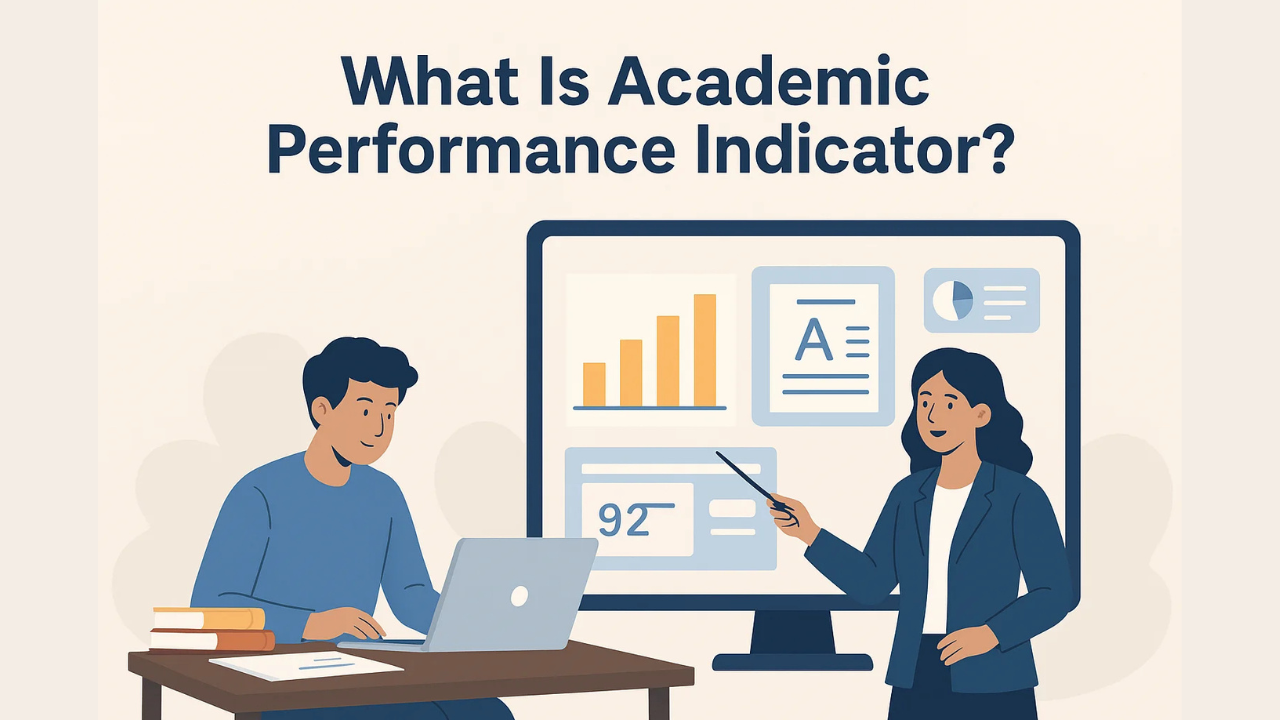
Simply put, an Academic Performance Indicator is as much a report card for the entire educational system as it is for the individual student. It serves as a tool for teachers, school leaders and even governments to have an awareness of what is successful in education and what needs to be changed.
APIs are not simply a number on a report, they are important tools for schools and districts to review what works and what doesn’t. APIs enable education leaders to make informed decisions, from evaluating the effectiveness of teaching and learning to monitoring student progress and the impact of programs. These indicators also drive strategic planning and inform the allocation of resources, and the guiding of funding resources where they are needed the most.
Types of Academic Performance Indicators
Academic performance indicators can be of several types. They all measure a different aspect of learning.
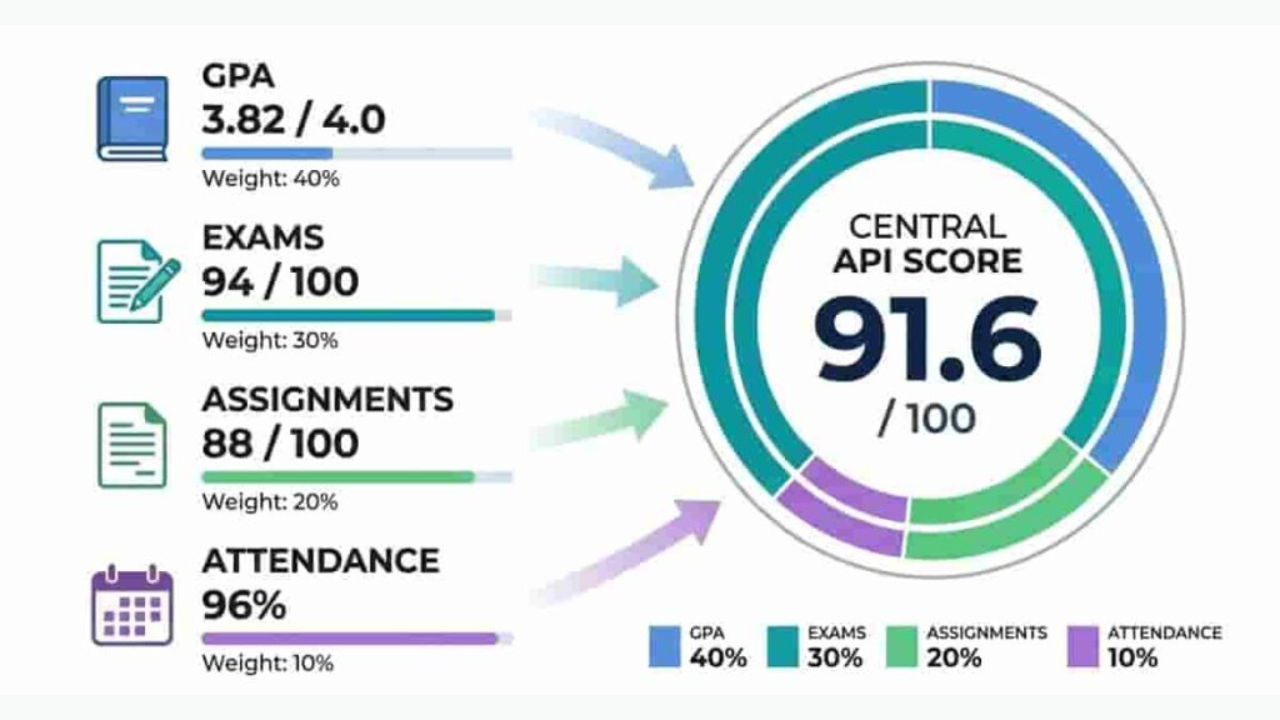
1.Grade Point Average (GPA)
GPA is a total indicator of a student’s work across the courses. It demonstrates a student’s mastery of the content, and frequently plays an important role in admissions decisions to college.
One of the most popular indicators is the GPA. Provides a long-term view of a student’s academic performance — not one test day.
2. Standardized Test Scores
A variety of tests, such as the SAT and ACT, are commonly used to evaluate student knowledge and academic preparedness. These scores can serve as a common measurement to allow students to be compared to peers from other schools, districts, and regions.
Standardized tests are particularly beneficial for comparing students within large groups.
3. Attendance Rate
The percentage of days a student attends school is directly related to engagement and learning outcomes, and is known as attendance rates.
Attendance data is correlated with lower achievement and can be used to help schools to identify at-risk students early and recognise trends in engagement.
In other words, no student can learn if they are not in school.
4. Graduation Rate
Graduation rate is the percentage of students who finish their study in a particular time. Exemplary teaching and learning is likely when the student achievement rate is high.
This indicator is very significant in the high school and university setting. It indicates the effectiveness of the education system at keeping students on track to graduation.
5. Course Completion Rate
GPA and course completion provide a comprehensive view of students over time. They monitor progress, not only on test day, but across subjects and are essential for graduation and college readiness.
The University’s research output (For Universities)
Research output is an important component of an institution’s academic performance for higher education institutions. These are the indicators that mean the number of research publications, the number of citations, conference presentations and books or patents.
Why Are Academic Performance Indicators Important?
Academic performance measures have a multitude of purposes. Let’s take a look at the key reasons why they are so important in the current education ecosystem.
They can detect pupils early who are having difficulties. Regular assessment of performance will enable teachers to identify easily which pupils are falling behind. This helps to assist before the problem is too large to solve.
They inform good teaching. Key performance indicators enable teachers to monitor student progress, understand how the group is doing and adjust their teaching to the needs of the individual.
They support fair funding and policy. APIs are directly related to accountability under the Every Student Succeeds Act (ESSA) at the state and federal levels. Schools are required to report and take action on certain indicators of performance, including graduation, academic progress, and English language proficiency, to show progress and continue to receive funding.
These are indicators of the success of institutions. Institutional-level indicators, including graduation rates, student retention rates, placement or employment rates, and academic ranks, provide a general overview of a school’s or university’s performance.
How Academic Performance Indicators Are Used in Schools
In reality, APIs are utilized in various ways within schools. They are used for lesson planning by teachers. School leaders employ them to establish objectives. They are used by governments to evaluate schools and for the development of national education policy.
APIs are frequently embedded in education dashboards or reports that show student progress. A school system, for instance, could observe an average standardized test score each year to see trends and areas that require intervention. Likewise, graduation rates and retention rates can be used as an API in the university’s evaluation of institutional effectiveness.

Concerning universities, it is important to be able to monitor the KPIs, such as online engagement measures, participation in extra-curricular activities, or career readiness indicators, to make sure that a student isn’t only passing a class but is ready for life after university.
Keep in mind that there are certain restrictions:
While academic performance indicators are powerful tools, they do have limits. They may not encompass all factors that are important for academic success. They may not take socio-economic issues and different learning styles into account for instance.
A student from a poor family may find it hard because they might not have the resources, food, family stress, or because they don’t have intelligence, all of which may be caused by a low-income family. Numbers can’t tell it all.
Therefore, personal discussions, teacher observations, and community support are also suggested in addition to API data.
Final Word
This is the best measuring tool in the world of learning at this time. It transforms complex issues and processes in learning into simple, measurable information for decisions made by students, teachers, schools and governments.
Last, the academic performance indicators are not only indicators of success, but also enhance learning and growth.
Whether you’re a student looking to boost your grades, a teacher wanting to assist your class, or a parent who wants to know how your child is doing, knowing the academic performance indicators will enable you to take the proper steps.
Education is a process — and these signs can ensure all are on track.
Read More: Crypings.com: A Complete Guide for 2026

No comment